
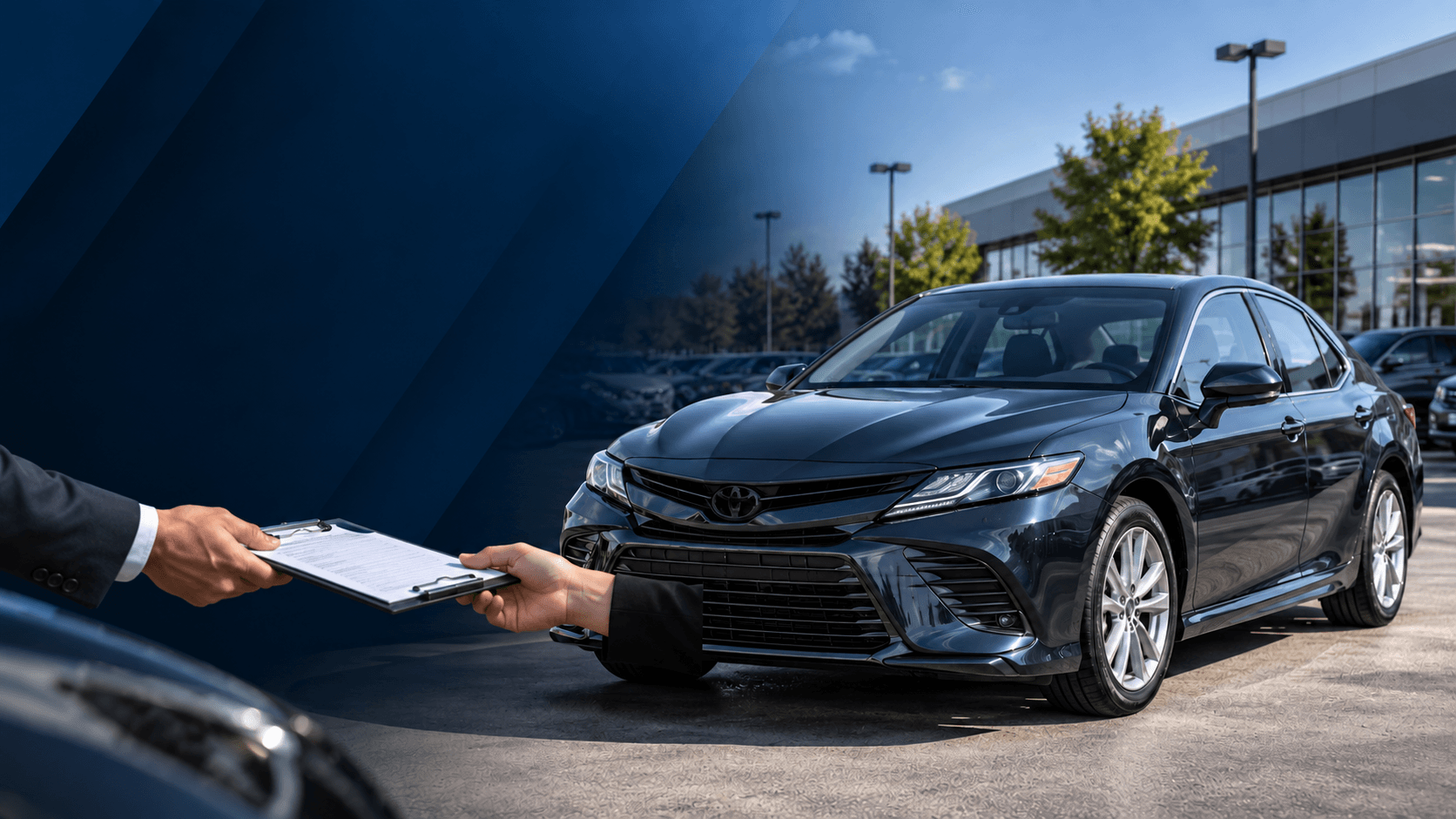
How to Negotiate a Used Car Price Without Overpaying
How to Negotiate a Used Car Price Without Overpaying
9 Sept 20261. Set Your Maximum Budget Before Contacting the Seller
Decide how much you can spend before you start negotiating. Your limit should include more than the advertised price. Account for sales tax, title and registration fees, insurance, immediate maintenance, and any dealer charges.
If you plan to finance the vehicle, do not build your budget around the monthly payment alone. A lower payment can hide a longer loan term and a much higher total cost. Focus on three separate numbers:
- The vehicle price
- The out-the-door price, including taxes and fees
- The total cost of financing
Keep your maximum budget private. The seller needs to know your offer, not the highest amount you are capable of paying.
2. Research the Car’s Real Market Value
An asking price is only a starting point. Before making an offer, compare the car with similar vehicles currently listed in your area.
Look for the same:
- Year, make, model, and trim
- Engine and drivetrain
- Mileage range
- General condition
- Accident and title history
- Major options or equipment
Compare several listings, not one unusually cheap example. A car priced far below the market may have mechanical problems, a branded title, missing records, or other issues that are not obvious in the advertisement.
Pricing guides can provide another useful reference, but they are not a perfect answer. Local supply, vehicle condition, seasonality, and demand can all affect the amount a buyer will realistically pay.
Your research should give you three numbers:
- A fair market range
- Your opening offer
- Your absolute limit
That range is your negotiating foundation.
3. Ask for the VIN and Review the Vehicle History
Request the vehicle identification number before you travel to see the car. Use it to review the vehicle history and check for open safety recalls.
A history report may reveal:
- Reported accidents or damage
- Title brands, such as salvage or flood
- Previous ownership
- Odometer inconsistencies
- Reported service history
- Commercial, fleet, or rental use
A clean report is helpful, but it does not prove that the car is problem-free. Not every repair or accident is reported. Treat the report as one part of your evaluation, not a replacement for an inspection.
You should also use the VIN to check whether the vehicle has any unrepaired safety recalls.
4. Inspect and Test-Drive the Exact Car
Never negotiate solely from photos. Images can hide worn tires, paint damage, warning lights, fluid leaks, unpleasant odors, and poor repairs.
Inspect the car in daylight if possible. Look at:
- Tire condition and uneven wear
- Panel gaps and mismatched paint
- Rust, dents, scratches, and glass damage
- Fluid levels and visible leaks
- Warning lights
- Interior wear, stains, and odors
- Heating, air conditioning, windows, lights, and electronics
During the test drive, pay attention to cold starting, braking, steering, shifting, acceleration, vibration, and unusual sounds. Drive at both city and highway speeds when it is safe to do so.
Do not let cosmetic condition distract you from mechanical condition. A freshly detailed car can still need thousands of dollars in repairs.
5. Get an Independent Pre-Purchase Inspection
If the car passes your initial checks, arrange a pre-purchase inspection with an independent mechanic. This is one of the strongest protections available to a used-car buyer.
Ask the mechanic to identify:
- Current safety or mechanical problems
- Maintenance that is due soon
- Evidence of leaks, corrosion, or collision repairs
- The condition of the brakes, tires, suspension, engine, and transmission
- Approximate repair costs
If the seller refuses a reasonable inspection request, treat that as a serious warning. Walking away from one car is cheaper than inheriting someone else’s mechanical problems.
6. Make an Evidence-Based Opening Offer
Do not throw out a random low number. An extreme lowball offer can end a productive conversation before it starts.
Base your offer on comparable listings and the condition of the vehicle. Explain it briefly and calmly:
“Similar vehicles with this mileage are listed around $18,000. This one needs tires and the inspection found a brake repair. Based on that, I can offer $16,900.”
You do not need a long speech. State the evidence, give the number, and stop talking. Silence gives the seller room to respond and prevents you from negotiating against yourself.
Your first offer should leave room for a counteroffer while remaining credible. If the car is already priced fairly and has no meaningful defects, there may be little room to negotiate. That is not a failed negotiation. A fair car at a fair price is still a good outcome.
7. Negotiate the Out-the-Door Price
At a dealership, ask for the total out-the-door price in writing. This is the amount you will pay after dealer fees, taxes, registration, and any add-ons.
Some negotiators focus so heavily on reducing the advertised price that they miss expensive products added later. Review every line before agreeing.
Ask whether each charge is:
- Required by law
- A dealer fee
- An optional product or service
Optional protection packages, service contracts, accessories, and other add-ons can increase the price quickly. Review the contract carefully, question unfamiliar charges, and ask for any unwanted optional products to be removed before signing.
8. Keep Financing Separate From the Vehicle Price
If you need a loan, seek preapproval from a bank, credit union, or other lender before negotiating. A preapproved offer gives you a benchmark and makes it easier to compare dealer financing.
Negotiate the vehicle price first. Then compare financing based on the annual percentage rate, loan term, monthly payment, and total amount paid.
The interest rate offered through dealer-arranged financing may be negotiable. Compare offers from multiple lenders before deciding which loan provides the best overall value.
Do not let the conversation shift entirely to “What monthly payment do you want?” A comfortable monthly payment can still produce an expensive loan if the term is stretched over more years.
9. Negotiate Your Trade-In Separately
If you are trading in a vehicle, settle the purchase price of the used car before finalizing the trade-in value. Combining both numbers makes it harder to see whether you are receiving a fair deal.
Get more than one trade-in estimate before visiting the seller. Then compare the net result, including any tax advantage your state may provide for trade-ins.
A dealer can appear to increase your trade-in allowance while giving less ground on the car you are buying. Separate numbers expose the real deal.
10. Be Ready to Walk Away
Your strongest negotiating position is the ability to leave.
Walk away if:
- The seller will not provide clear answers
- The VIN, title, or history raises unresolved concerns
- The seller refuses an independent inspection
- The final price exceeds your limit
- Unexpected fees appear in the paperwork
- The written agreement does not match what you discussed
- You are being pressured to decide immediately
There will be another used car. A rushed purchase can become an expensive lesson.
Used Car Negotiation Mistakes to Avoid
Becoming attached to one car
Emotional attachment weakens your ability to judge the price and walk away. Keep at least two or three reasonable alternatives on your shortlist.
Making an offer before inspecting the vehicle
You cannot price the car accurately until you understand its condition. Inspect first, then negotiate.
Using minor flaws as fake leverage
Normal wear on an older vehicle is already reflected in its market value. Focus on meaningful defects and real repair costs.
Negotiating only the monthly payment
This hides the purchase price, interest charges, fees, and loan length. Negotiate the complete deal.
Trusting verbal promises
If the seller agrees to repair something, include it in the written agreement. A verbal promise is much harder to rely on after the transaction is complete.
A Simple Used Car Negotiation Script
You do not need clever tricks. Use a direct, respectful approach:
“I like the vehicle, and I’m prepared to move forward if the numbers make sense. Comparable cars are selling between $21,000 and $22,000. The inspection also found about $900 in work that will be needed soon. I can offer $20,700, subject to a clean title and the agreed out-the-door total.”
If the seller counters, compare the new figure with your maximum. Do not increase your offer simply because the seller paused, repeated the asking price, or said another buyer may be interested.
Find and Compare Used Cars With More Confidence
Negotiation becomes easier when you can compare multiple vehicles and understand the market before contacting a seller. Browse used cars on CarNetwork, compare the details that affect value, and use your research to make a fair, informed offer.
Frequently Asked Questions
Find quick answers to common questions